
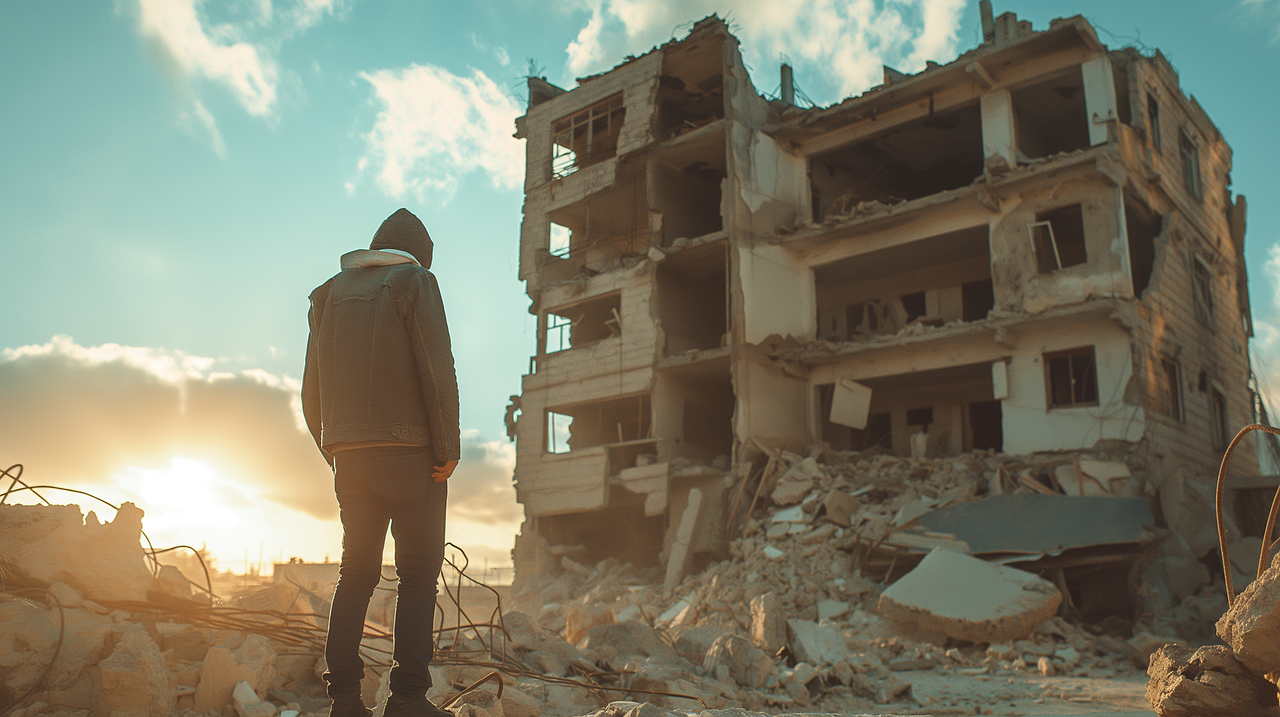
In today’s hyper-connected world, global conflicts unfold in real-time across our screens. Hashtags trend, videos go viral, and public opinion hardens within hours. Before a war is a week old, millions of people have already chosen a side, defended it, and turned it into part of their identity.
This instinct is understandable. Faced with images of suffering, we want to know who is right and who is wrong. Choosing a side feels like a moral act. But when it replaces understanding, it becomes something else: a way of feeling involved without actually knowing anything.
Every war has a long prologue
No conflict begins on the day the first missile is launched. Borders drawn by distant powers, promises broken, populations displaced, old humiliations passed down from one generation to the next: wars are the visible end of very long stories. When we only look at the last chapter, we inevitably misread the whole book.
Understanding that history does not mean justifying violence. It means recognizing that the people involved are acting inside a context they did not choose, carrying memories that outsiders often ignore. Without that context, every war looks like a simple story of good against evil, and simple stories are exactly what propaganda needs.
Taking sides is easy. Understanding is work
Social media rewards speed and certainty. A clear position gets shared; a nuanced one gets scrolled past. The result is a public conversation where slogans travel faster than facts, and where asking a question can be mistaken for betrayal.
Real understanding is slower. It asks us to read sources we disagree with, to learn the names of places we could not find on a map, to accept that two groups can both carry legitimate grievances. It is uncomfortable, because it removes the comfort of being entirely right.
Why it matters for peace
Peace is not built by the side that shouts the loudest. It is built when people are able to recognize the fears and the history of the other side, even while disagreeing with them. Every lasting agreement in history has required exactly this: someone willing to understand before judging.
When public opinion is reduced to two opposing camps, leaders have little room to negotiate. Compromise looks like weakness, and the conflict feeds itself. An informed public, on the other hand, can push for solutions instead of victories.
A different way to look at the news
Next time a conflict fills your feed, try a simple exercise before reacting. Ask how it started, and then ask what happened before that. Look for one historian, one local voice, and one source from the “other side.” You may end up with the same opinion, but it will be your own, not one borrowed from an algorithm.
Understanding the history of wars will not stop them overnight. But it is the first step out of the noise, and the only position that truly sides with the people who live through them.